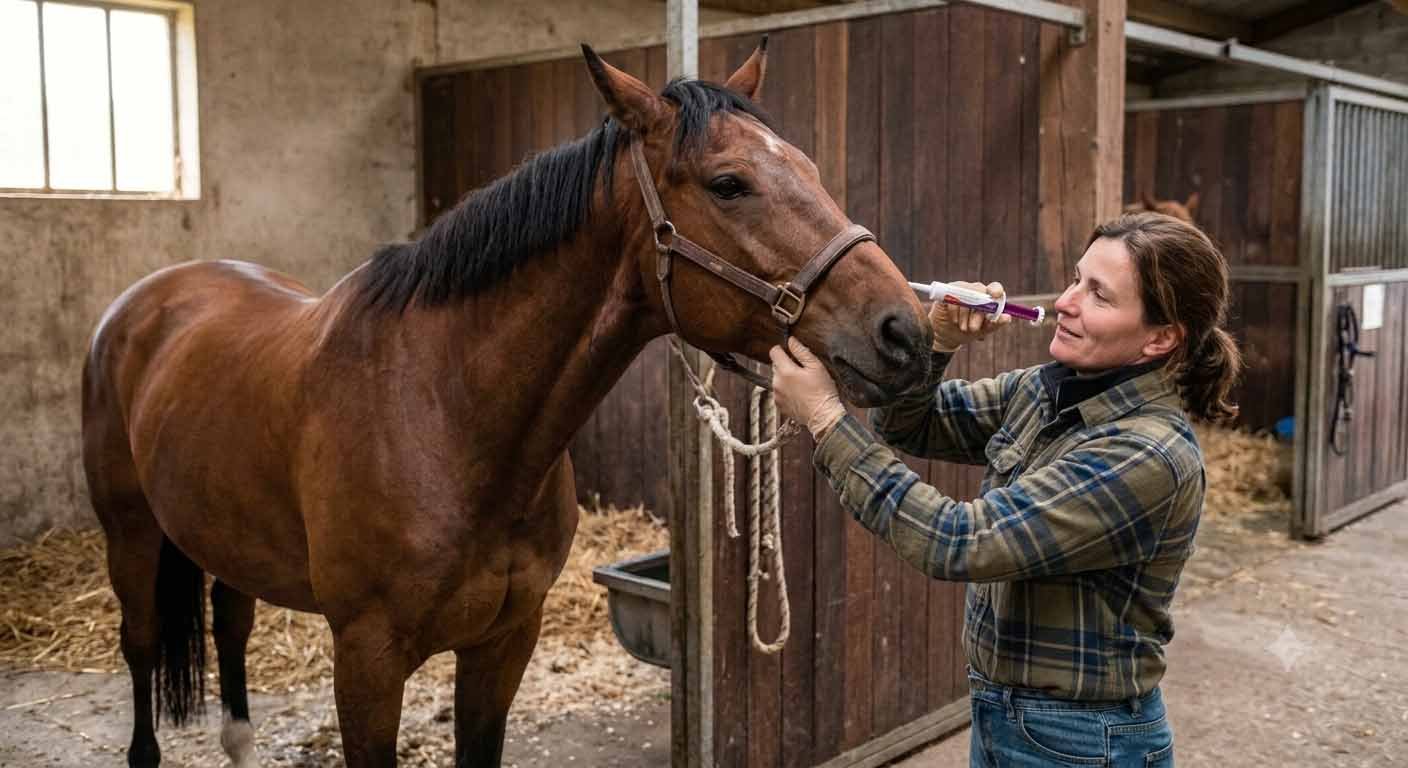
Deworming an entire herd on a set date four times a year without question—a practice long considered a hallmark of a good manager—now creates resistant parasites. Equine deworming has shifted to a targeted approach, treating the right horse at the right time with the correct molecule. This rigor is especially crucial for vulnerable animals, such as when preventing and protecting foal health.
The principle is simple to state but harder to execute in the field. Treating less often, but better, requires knowing each animal's parasite status and reasoning at the herd level. This cultural shift impacts professional breeders and owners with a single horse on pasture alike.
Deworming Less, But Better: Addressing Resistance
For fifty years, broad-spectrum dewormers handled most parasite issues. The downside of that convenience is now coming due. Through systematic treatment, the most resistant parasite strains survived and multiplied.
The issue is well documented. According to industry research, strongyles resistant to ivermectin have been widely identified, alongside populations resistant to multiple classes of dewormers. Two behaviors worsen the phenomenon: underdosing, when a horse's weight is underestimated, and over-frequent deworming. The goal is no longer to treat indiscriminately, but rather to deworm judiciously, as infrequently as possible, and only when necessary.
Parasites to Monitor in Horses
A sound parasite control program starts with knowing what you are fighting. Not all parasites share the same life cycle or level of danger.
- Small strongyles (cyathostomes): The most common. Their larvae encyst in the large intestine wall, and their spring reactivation can cause colic, diarrhea, and weight loss.
- Large strongyles: Rarer today, but formidable. Their larval migrations can cause thromboembolic colic, which is often fatal.
- Roundworms (Parascaris): Large roundworms, particularly dangerous in foals, where they disrupt growth.
- Tapeworms (anoplocephala): Flatworms attached to the ileocecal junction, predisposing horses to impaction colic.
- Bots (Gastrophilus): Larvae living in the stomach, requiring removal from the hair in the fall.
Parasitism never acts alone on a farm. Poorly managed parasite burdens weaken immunity and pave the way for other health issues, which is why we also document situations involving infectious anemia risks and prevention.
Fecal Egg Counts: The Compass of Targeted Deworming
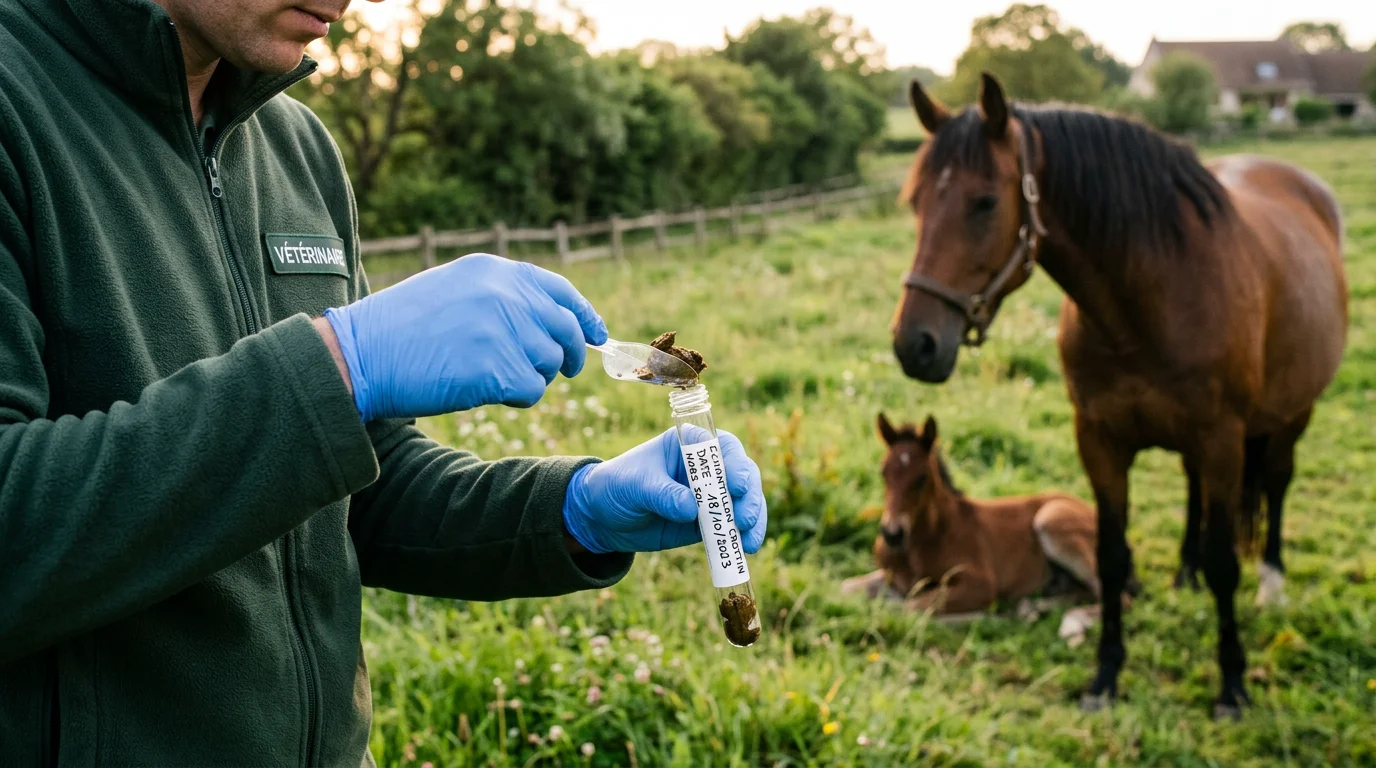
A fecal egg count (FEC) is the microscopic analysis of manure that counts parasite eggs per gram (EPG). It is the essential tool to treat only truly infested horses and to detect drug resistance.
It relies on an overlooked reality: not all horses handle parasites equally. Studies show that only 20% to 30% of horses are high shedders. A low shedding horse may only need 1 to 2 dewormings per year, while a high shedder requires around 3. The common decision threshold is around 200 strongyle eggs per gram of manure. After treatment, a follow-up count verifies that the molecule remains effective.
Selective vs. Strategic: Two Plans, One Goal
Two main approaches coexist, which should be determined with your veterinarian based on your farm's risk profile.
Selective deworming applies only to adult horses and targets small strongyles. Regular FECs are performed (4 times the first year, then 3), and only animals above the threshold are treated. This allows a portion of sensitive parasites to survive, slowing down resistance.
Strategic deworming is more traditional: it relies on age and lifestyle, updated according to resistance risks. It is preferred whenever large strongyles—the most dangerous—might be present, as their larval stages elude fecal egg counts.
Tailoring Protocols to Age and Lifestyle
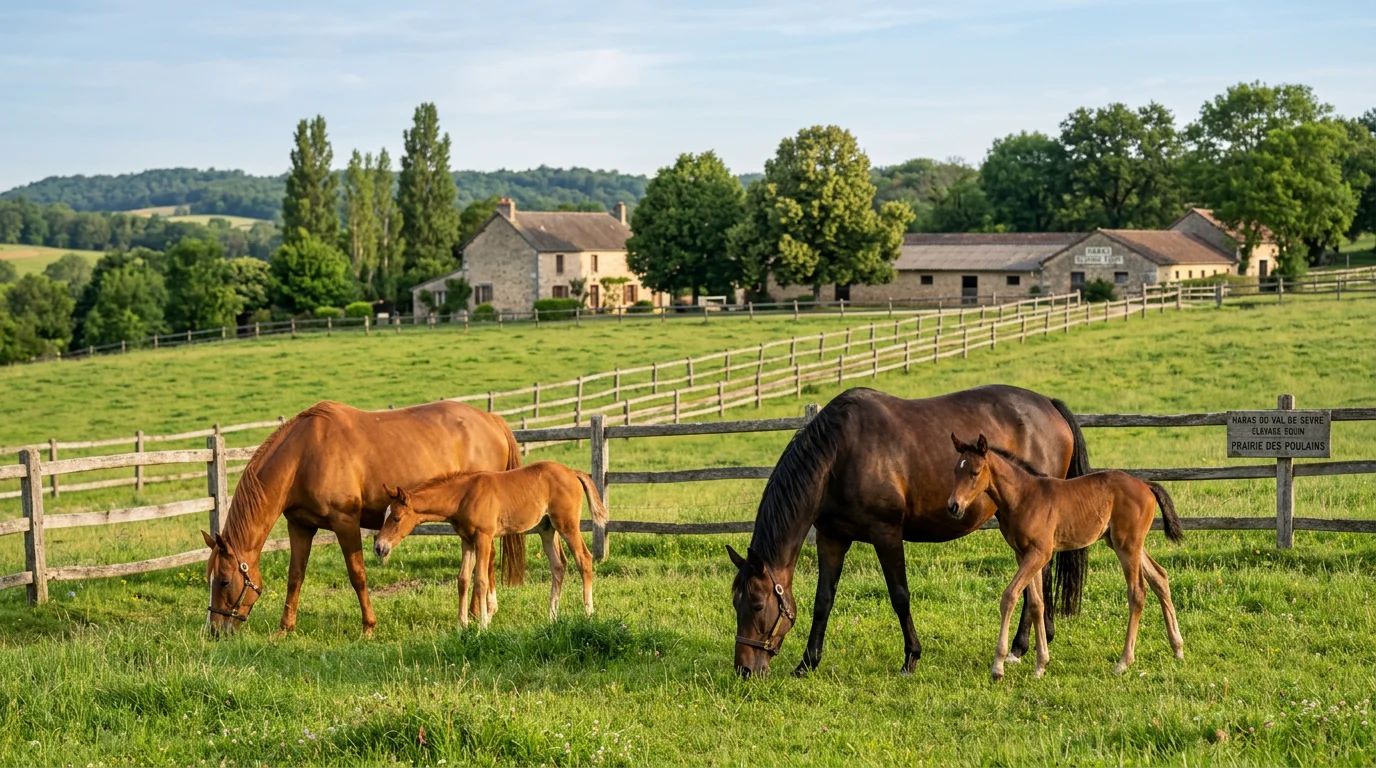
Parasite risk depends heavily on age and access to pasture. Pastured horses are far more exposed than those kept in stalls.
- Foals: Monitored for roundworms, then strongyles starting at 6 months. Individual or pooled FECs guide targeted treatments.
- Young horses (1 to 4 years old): Highly sensitive to small strongyles; a more robust protocol is often necessary.
- Adults: 2 to 4 dewormings per year depending on shedding status and FEC results.
- Broodmares: Follow the same logic as other adults, with vigilance regarding threadworms (treatment 24 to 48 hours after foaling if present).
As industry guidelines highlight, repeated and untargeted administration has driven resistance, emphasizing the value of individualized monitoring. For broodmares, this monitoring integrates into the breeding calendar; our resources help you manage the correct schedule for mares and foaling.
Breaking the Cycle in Pasture and Barn
Dewormer isn't a silver bullet. Pasture management matters just as much as the medication in controlling parasitism.
- Wait 48 hours before turning a newly dewormed horse back out to pasture to prevent immediate recontamination of the paddock.
- Regularly pick up manure and practice pasture rotation.
- Treat horses within the same paddock together and quarantine any new arrivals.
- Allocate approximately 2 acres per horse to limit parasite pressure.
These practices provide immense leverage. Industry data indicates roughly 20% of horses harbor 80% of a group's parasite burden, with resistance to benzimidazoles detected in over half of tested herds. Parasite management ties directly into overarching health protocols, much like equine influenza prevention measures.
Managing a Herd's Deworming Without Mental Fatigue
On paper, targeted deworming is straightforward. On a farm with twenty horses, juggling FEC dates, shedding statuses, reminders, and record-keeping quickly becomes a headache. That is where management software steps in.
Our veterinary health log centralizes diagnostics, treatments, and reminder dates for each horse, while registry imports instantly sync your animals and broodmare breeding histories. Daily morning briefings and advanced analytics transform scattered paperwork into clear oversight across your entire operation.
| Criterion | Paper Records | Spreadsheets | Our Foalia Platform |
|---|---|---|---|
| Registry Horse Imports | No | No | Automatic |
| Breeding History | Manual | Manual | Imported & Centralized |
| Vet Reminders & Vaccines | No | Manual | Calculated & Notified |
| Tracking Analytics | No | Limited | Advanced |
Key Takeaways for Your Horses
Targeted equine deworming is not a trend: it is the only way to preserve the efficacy of remaining deworming molecules. Base every decision on fecal egg counts, target high shedders, manage pastures diligently, and build your protocol with your veterinarian. Breeders who adopt this rigor treat less frequently, spend less over time, and better protect their herds.
Take Action with Foalia
Deworming correctly starts with knowing precisely where each horse stands: last treatment, shedding status, next due date. When this information is scattered across notebooks, texts, and memory, targeted deworming becomes impossible to maintain long-term.

We built a platform that centralizes health records, calculates reminder dates, imports your horses and broodmare histories from breed registries, and alerts you at the right time. Learn more about our tips and resources for equine health to ease your daily mental load.
Frequently Asked Questions
How often should an adult horse be dewormed?
It depends on their shedding status and lifestyle. A low-shedding horse may only need 1 or 2 treatments per year, while a high shedder needs about 3. Fecal egg counts help decide on a case-by-case basis.
Do fecal egg counts completely replace dewormers?
No, they guide them. They indicate which horses to treat and check deworming efficacy, but certain parasites like large strongyles or tapeworms evade this analysis. A veterinary plan remains essential.
Why shouldn't everyone be dewormed at the same time anymore?
Because treating healthy, low-parasitized horses selects for resistant parasites. By allowing a sensitive population to survive, we preserve the efficacy of available molecules longer.
How should broodmare deworming be managed?
The protocol is similar to other adults. If threadworms are present on the farm, a treatment 24 to 48 hours after foaling is recommended. A fecal egg count verifies the absence of roundworms to protect the foal.
Does digital software really help track deworming?
Yes, as soon as you manage multiple horses. Our health log centralizes treatments and reminders, and registry imports prevent double entry. You keep a clear view of each animal's schedule.