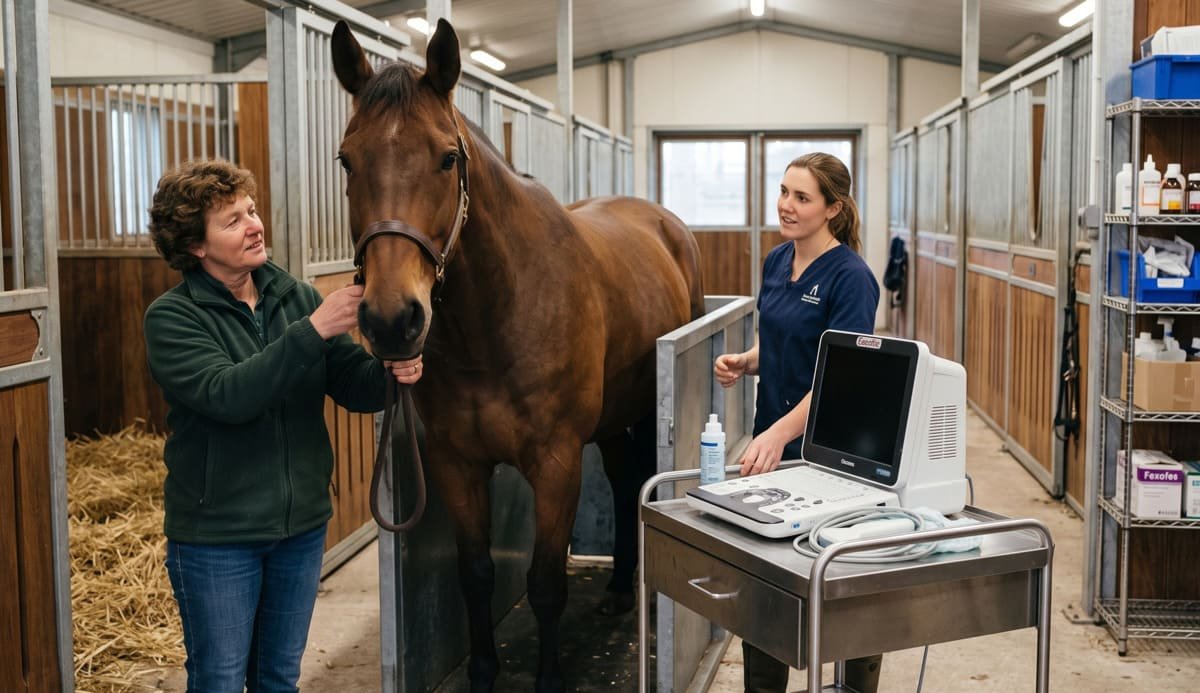
A mare coming back into heat three times in a single season means losing a foal crop year and watching breeding fees and farm expenses skyrocket. Behind every successful foaling lies a methodical routine of heat detection, ultrasound scans, and precise breeding timing. That is the core of broodmare reproductive management—a precision discipline where every single day counts. To establish clear benchmarks right from the first heat cycle, our mare pregnancy and gestation calendar helps structure your entire breeding season.
The principle is simple to state but demanding to execute: track ovarian activity, perform live cover or artificial insemination (AI) within the optimal window, confirm pregnancy early, and support the broodmare through foaling. Between vet visits, vaccine boosters, and keeping farm records compliant, the workload adds up quickly. When properly organized, reproductive tracking turns months of uncertainty into a streamlined, predictable process.
Why Reproductive Tracking Drives Barn & Farm Economics
Broodmare fertility is far more than a biological metric—it directly dictates the bottom line of any horse farm or ranch. According to equine veterinary reproductive studies, live foal rates consistently hover between 65% and 70% per breeding season across major registries. In other words, nearly one out of every three mares bred fails to produce a live foal in a given year.
This statistic carries immense financial weight. According to USDA equine industry surveys, feed, vet care, and stud fees represent substantial annual investments per broodmare. Every missed heat cycle costs money: additional board, cumulative veterinary fees, re-breeding expenses, and a delayed foal crop. Precise reproductive tracking is not a luxury—it is essential farm management.
Ovarian Monitoring: Reading Heat Signals & Timing Ovulation
Everything starts with the ovaries. Mares are seasonally polyestrous, cycling roughly every 21 days between estrus (heat) and diestrus. During winter, most mares enter seasonal anestrus and cannot be bred, which is why timing the start of the breeding season is so critical.
Daily or every-other-day teasing using a teaser stallion identifies behavioral estrus, but transrectal ultrasound provides true diagnostic precision: measuring dominant follicle growth, uterine edema, and impending ovulation. The fertile window is narrow. Sperm viable life spans roughly 48 hours in the reproductive tract, while the ovum survives only 6 hours post-ovulation. Live cover or artificial insemination must occur within this tight timeframe. Rigorous ovarian monitoring is what separates a successful cycle from a lost month.
From Pregnancy Diagnosis to Foaling
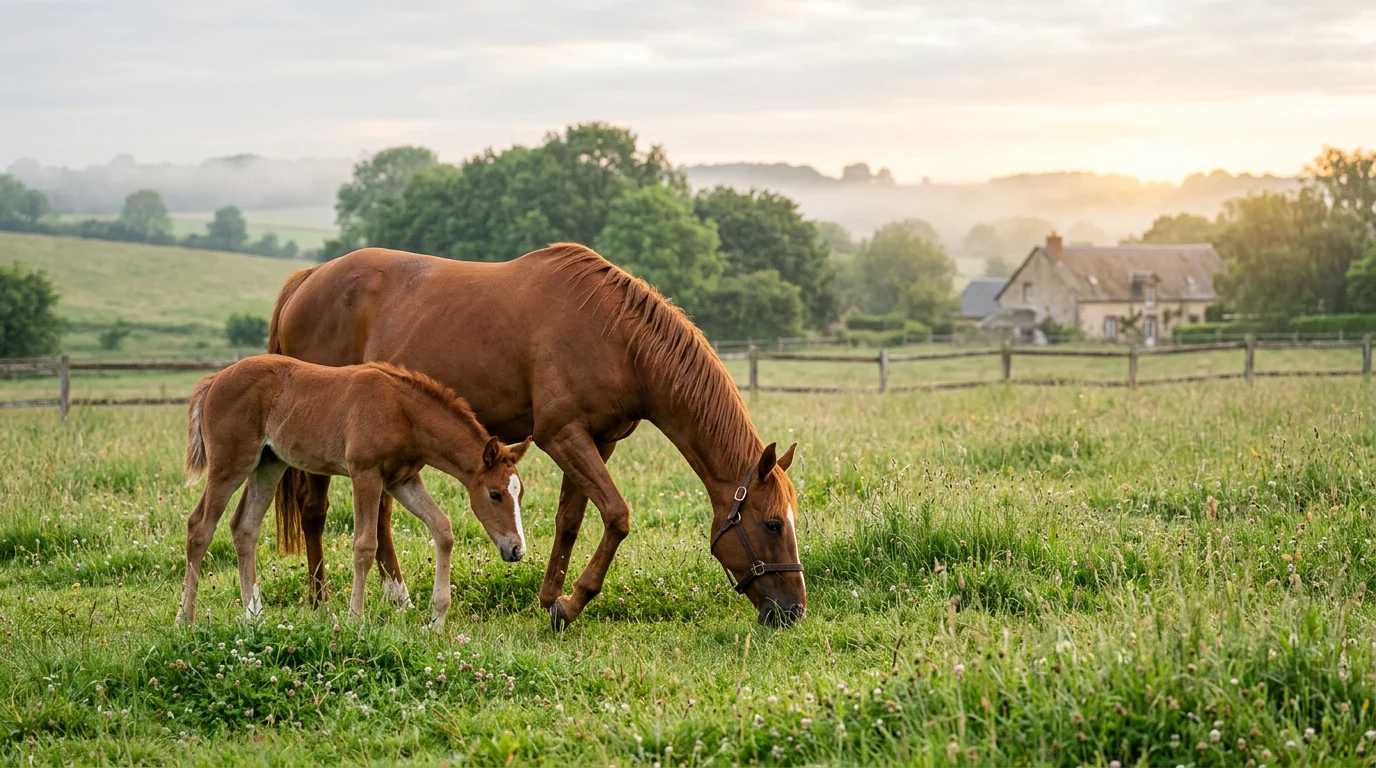
Once the mare is bred, a new countdown begins. Early pregnancy diagnosis via transrectal ultrasound is conducted between 14 and 16 days post-ovulation. This early scan is crucial for detecting twin gestations, allowing veterinarians to perform manual reduction before fixation to prevent abortion or high-risk delivery.
A confirmation scan around day 30, followed by a heartbeat check between 45 and 65 days, secures the pregnancy through the critical early embryonic loss window. Next come key operational milestones: adjusting grain and forage rations starting at month six, administering core EHV-1/4 vaccines, preparing the foaling stall, and watching for pre-foaling signs (udder development, waxing, pelvic ligament relaxation). To manage every detail across the 11-month gestation period, refer to our guide on month-by-month mare pregnancy tracking.
Beyond Vet Visits: Farm Registers, Traceability & Record-Keeping
Veterinary care is only half the job. The other half—often the most tedious—is administrative record-keeping. Across the US, horse breeding operations must maintain detailed records for breed registries (such as AQHA, Jockey Club, or USEF), stallion service certificates, state-to-state movement papers, and USDA health compliance as highlighted by the USDA Animal and Plant Health Inspection Service (APHIS). Every breeding cover, insemination date, and foal birth must be documented.
Updating breeding logs, calculating vaccine booster dates, and filing ultrasound reports often stack up after a long day in the barn. This administrative burden quickly becomes overwhelming. Organizing these requirements upfront prevents costly record oversights and registry registration delays. Our equine breeding farm register for health and reproduction centralizes your data so compliance flows naturally with your daily routine.
Centralizing Care: From Paper Binders to Digital Software
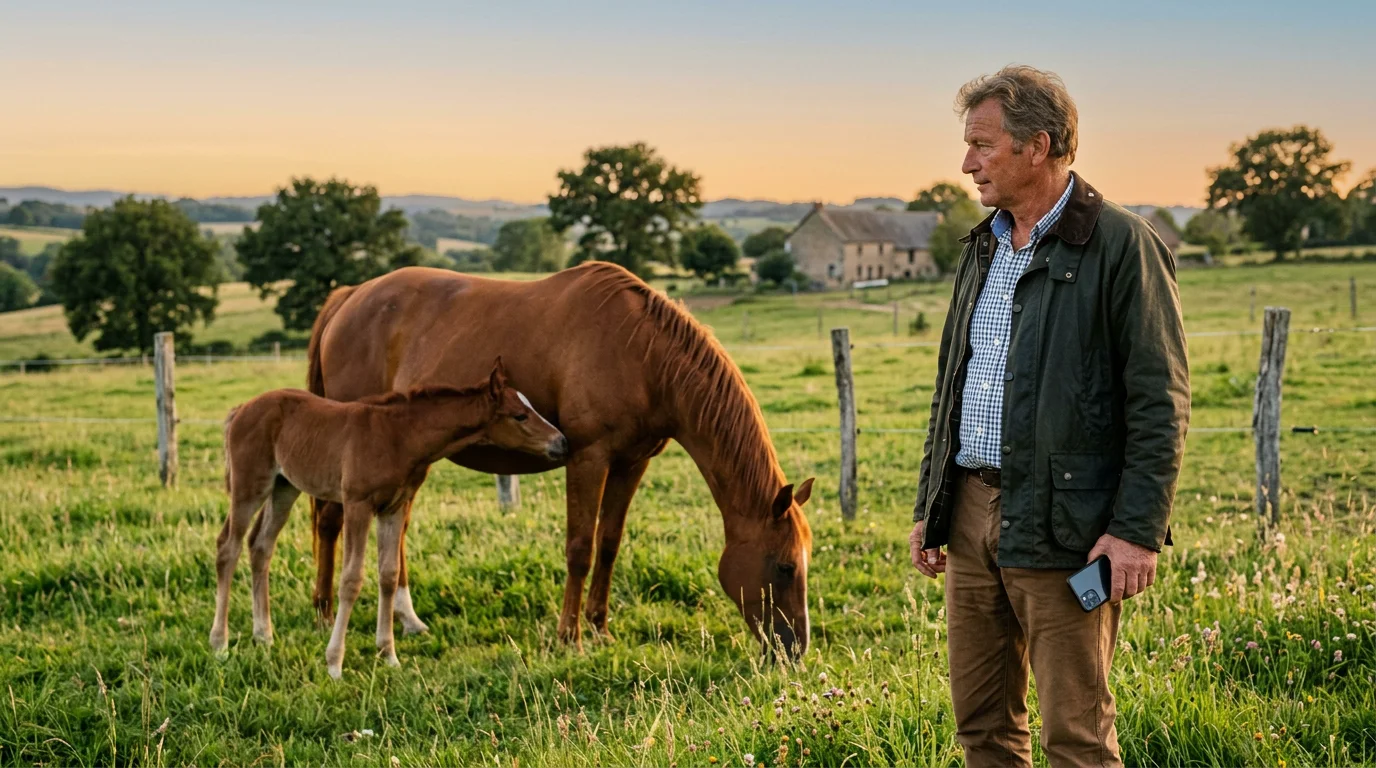
Paper logbooks and static spreadsheets are relics of the past. They require repetitive manual data entry, cannot auto-calculate due dates, and never alert you when a mare is about to foal. As your herd grows, tracking multiple broodmares and past breeding histories becomes chaotic and error-prone.
Our platform was built directly for barn and farm operations. Automated horse profile importing brings in your equine data and past mare pregnancy records seamlessly. Complete breeding management—heat tracking, AI/live cover logs, ultrasound results—feeds into our foaling predictor index, while smart alerts notify you as expected foaling dates approach. Advanced analytics learn from past gestations to refine future predictions. To streamline your herd management protocols, review our guide on barn management records and breeding compliance.
Tracking Method | Automated Horse Data Import | Gestation & Breeding Tracking | Foaling Alerts | Barn & Farm Records |
Paper Logbook | No | Manual | No | Manual |
Spreadsheets | No | Manual | No | Manual |
Our Foalia Platform | Yes | Automated | Predictive | Automated & Compliant |
Key Takeaways for Your Breeding Season
Successful broodmare reproductive management rests on three core disciplines: monitoring ovarian activity to breed within the optimal window, confirming pregnancy early while managing high-risk milestones, and maintaining flawless farm records. These three pillars cannot be left to chance. Plan your breeding calendar well before the first spring heat, work closely with your equine veterinarian for key ultrasound scans, and centralize every data point instead of scattering notes across notebooks and spreadsheets. Organized management—not luck—is what delivers a healthy foal year after year.
Take Control of Your Farm with Foalia
Managing a breeding season with paper logs means accepting forgotten dates, missed heat cycles, and late nights doing paperwork. You deserve to focus on your broodmares, not on messy spreadsheets. Your horses, heat cycles, pregnancy records, and health reminders belong in one centralized hub, accessible directly from the pasture.

With our equine barn and breeding management platform, you can import your horse herd and past gestation records seamlessly, automate farm compliance and health tracking, and receive predictive foaling alerts alongside a daily barn briefing. Built-in emergency tools complete your setup, giving you total peace of mind so you can focus on what matters most: your mares and their future foals.
Frequently Asked Questions
When can pregnancy be diagnosed in a mare?
Transrectal ultrasound pregnancy diagnosis can be performed as early as 14 to 16 days post-ovulation. Re-checking around day 30 to 35 and confirming fetal heartbeat between days 45 and 65 is recommended, as early embryonic loss can occur during this period. Early ultrasound detection is also vital for identifying and manually reducing twin gestations.
How frequently should ovarian ultrasound monitoring be performed?
During estrus, teasing and ultrasound exams are typically conducted every 48 hours. As the dominant follicle nears ovulation size, examination frequency increases to pinpoint breeding timing, especially when using frozen semen or limited breeding doses. Your veterinarian will tailor the scan schedule based on follicle growth and uterine edema.
What is the optimal window for live cover or artificial insemination?
Equine spermatozoa typically remain viable for about 48 hours in the mare's reproductive tract, whereas the unfertilized ovum survives for only about 6 hours post-ovulation. Breeding or AI should occur within the 48 hours leading up to ovulation or within hours after. This precision maximizes per-cycle conception rates.
Does reproductive tracking apply to foaling mares with foals at side?
Yes, and it is highly strategic. Mares with foals at side (nursing mares) can be re-bred during foal heat, with follicle checks starting around day 5 to 9 post-foaling. Nursing broodmares often exhibit high fertility rates compared to barren or maiden mares when monitored closely.
How can I maintain reliable records of all reproductive tracking?
A centralized digital tool eliminates manual re-entry and prevents missed deadlines. Our platform imports your horse profiles and breeding histories, automates barn record-keeping, and calculates vaccine booster schedules. You maintain a complete, audit-ready health and breeding history accessible right from your phone or tablet in the pasture.


