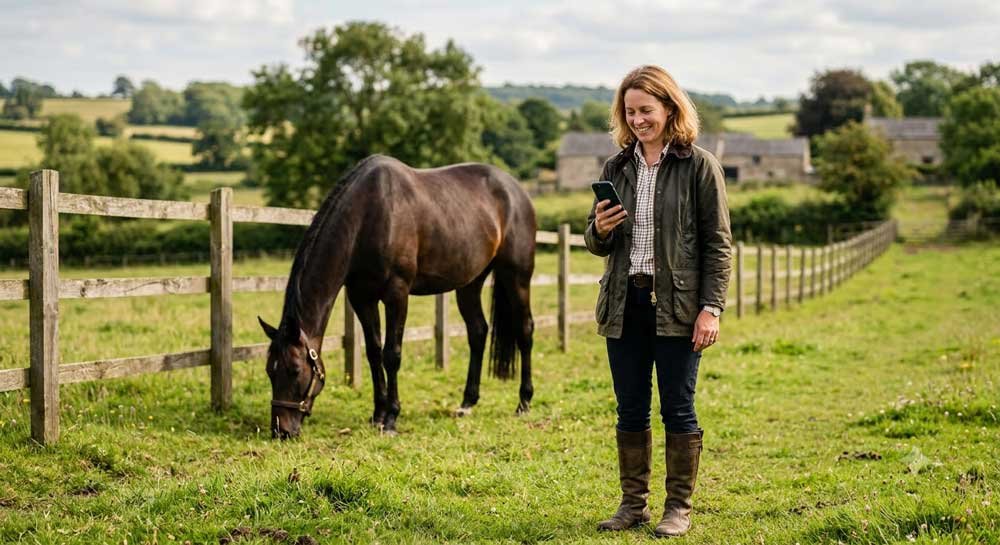
Whether you manage a 40-horse competition livery yard, a Thoroughbred breeding stud, or keep two ponies in a private paddock, maintaining accurate equine records is a legal duty under UK law. Equine record-keeping is essential not only for passing official inspections but also for preventing disease transmission and protecting horse welfare across the country.
Equine governance in the UK is overseen by Defra alongside devolved administrations in Scotland and Wales, and enforced in equestrian sport by British Equestrian and the British Horseracing Authority (BHA). For yard managers and horse owners, staying on top of daily medical logs, passports, and movement records is critical for seamless operations.
Defra Horse Passports, Microchipping, and the Central Equine Database (CED)
Under UK legislation, every equine must be microchipped and have an official physical Horse Passport issued by an authorized Passport Issuing Organisation (PIO)—such as Weatherbys, the British Horse Society (BHS), or breed societies. Passports must accompany the horse whenever it travels, changes ownership, or receives veterinary treatment.
Key statutory passport requirements include:
- Central Equine Database (CED) Registration: All equine details and microchip numbers are recorded on the national CED network. Owners must update the database via their PIO or Digital Equine Passport app within 30 days of purchasing a horse or changing address.
- Food Chain Declaration (Section II / IX): Owners must declare whether the equine is intended for human consumption. Signing the horse out of the food chain allows veterinarians to administer essential medications (such as Phenylbutazone / 'Bute') that are strictly prohibited in food-producing animals.
- Passport Inspection Availability: Passports must be stored on-site at the yard and be immediately available for inspection by Trading Standards officers or Defra inspectors.
Failing to produce a valid passport upon request can result in fixed penalty notices or prosecution. Digital horse record software lets you store digitized passport copies, microchip numbers, and food chain status right on your phone for quick access.
County Parish Holding (CPH) Numbers and Movement Traceability
A major regulatory requirement for UK horse keepers is registering their land or premises with the Rural Payments Agency (RPA) to obtain a County Parish Holding (CPH) number. Any site where equines are kept—including livery yards, stud farms, riding schools, and private paddocks—must have an assigned CPH number.
Traceability records must document:
- On/Off Premises Movement Logs: Tracking horse movements into and out of the yard, including temporary stays for training, breeding, or competition.
- Temporary Residence Records: Logging visiting horses staying at the yard for more than 30 days to assist animal health authorities during disease tracing.
- Isolation Protocols: Maintaining movement and health monitoring logs for new arrivals placed in quarantine to prevent the introduction of infectious conditions like Strangles or Equine Viral Arteritis (EVA).
During localized disease alerts or national biosecurity incidents, holding accurate movement logs allows yard managers to demonstrate compliance and protect resident horses.
Veterinary Medicines Register and Vaccination Rules
Under the UK Veterinary Medicines Regulations, horse keepers are legally required to maintain a detailed record of all veterinary treatments and prescription medicines administered to their animals. This record must be kept for a minimum of five years.
Your yard's medicine record book or digital log must include:
- Medicine Details: Product name, batch number, date of administration, quantity administered, and name of the person administering the treatment.
- Prescription Drugs (POM-V): Logs for controlled veterinary drugs, including antibiotics, anti-inflammatories, and sedatives prescribed by your veterinary surgeon.
- Targeted Worming & FEC Records: Logging Fecal Egg Count (FEC) laboratory results and targeted deworming treatments to prevent anthelmintic resistance.
- Equine Influenza Vaccination Rules: British Equestrian (BEF) disciplines (British Eventing, British Showjumping, Dressage) and the BHA enforce strict vaccination schedules, requiring annual boosters—or 6-month boosters for certain competition venues.
Missing a vaccination deadline by even a single day invalidates a horse's competition eligibility and requires restarting the primary vaccination course. For more details on young stock disease prevention, read our article on Equine Infectious Diseases: Preventing and Recognizing Health Risks.
Paper Yard Registers vs. Digital Yard Management Software
Many UK yards still rely on paper whiteboards, physical medicine logbooks, and lever-arch passport binders stored in the tack room. However, manual records are vulnerable to loss, damage, and human error. Upgrading to a modern cloud-based management platform ensures total compliance effortlessly.
The table below compares traditional paper tracking with modern digital solutions:
| Requirement / Feature | Paper Binders & Logbooks | Foalia Digital Platform |
|---|---|---|
| Vaccination & Booster Alerts | No (Requires manual diary checks) | Yes (Automated smart reminders) |
| Veterinary Medicine Records | Handwritten medicine books | Yes (Compliant digital medicine log) |
| Passport & Microchip Storage | Physical binders only | Secure digital storage & instant search |
| Movement & Breeding Logs | Paper movement sheets | Real-time cloud tracking for staff & owners |
Digital management saves valuable time for yard owners, head grooms, and breeders, allowing them to focus on horse care while staying fully compliant with UK law.
Key Takeaways for UK Yard Managers and Horse Owners
Rigorous equine record-keeping is essential for complying with Defra regulations, maintaining CPH premises registration, logging veterinary medicines, and adhering to competition vaccination rules across the UK. Digitizing your passports, medical logs, and movement registers safeguards your yard against regulatory penalties and protects overall herd health.
Take Action with Foalia
Managing passports, recording veterinary medicine administrations, tracking CPH movements, and keeping up with equine flu booster dates across a busy yard demands considerable time and effort. Utilizing an intuitive digital tool lightens your administrative workload significantly.

With our equine management platform featuring digital health records and automated registers, you can manage your horses' complete records, set automated vaccination alerts, record medicine logs, and maintain compliance seamlessly. Spend less time on paperwork and more time with your horses.
Frequently Asked Questions
Is it mandatory to keep a Medicine Record Book for horses in the UK?
Yes. Under the UK Veterinary Medicines Regulations, all horse keepers must record details of all veterinary medicines administered to their animals (including product name, batch number, dose, and administration date) and retain these records for at least five years.
What is a CPH number and do I need one for my horses?
A County Parish Holding (CPH) number is a unique location identifier issued by Defra / RPA for land where livestock or equines are kept. Any yard, farm, or paddock keeping horses must be registered with a CPH number for disease movement tracking.
Why is Section IX / Section II of the Horse Passport important?
This section records whether the horse is declared as intended or not intended for human consumption in the food chain. Signing the horse out of the food chain allows your vet to administer essential medications such as Phenylbutazone ('Bute').
How does Foalia assist UK yard managers with compliance?
Foalia securely stores digitized passport details, microchip numbers, and medical histories while providing automated reminders for equine flu boosters, worming schedules, and pregnancy checks, keeping your yard 100% audit-ready.