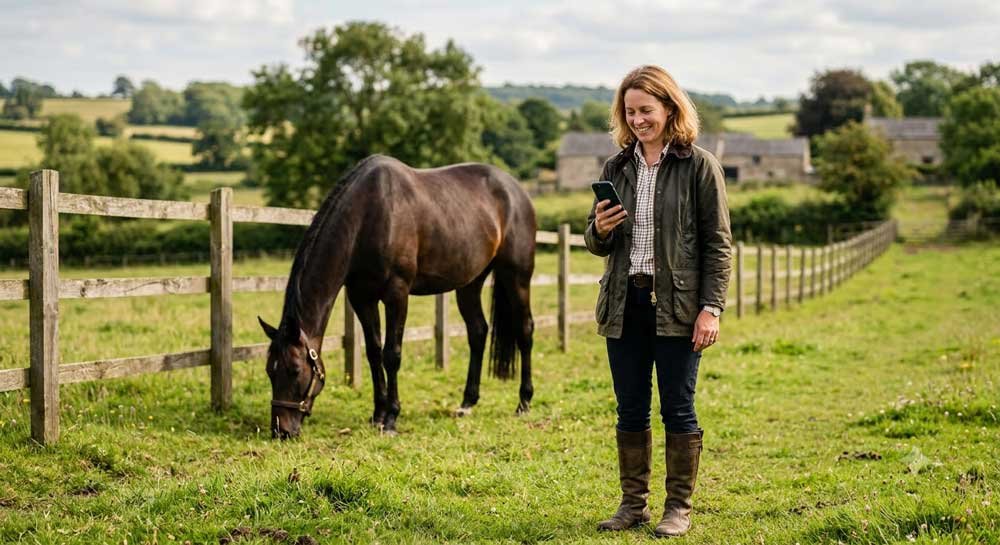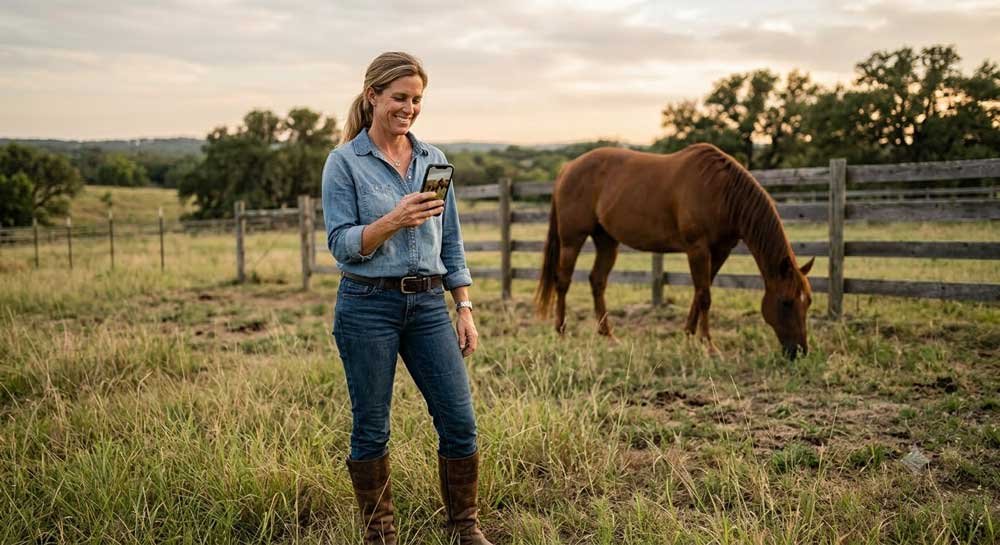
Even if you only keep two retired horses on a small acreage, accurate record-keeping is vital. On commercial breeding ranches, boarding facilities, and training barns, maintaining detailed individual health logs and movement histories is not just good practice—it is an operational requirement. Equine record-keeping ensures state compliance, simplifies breed registry filings, and protects your entire herd during disease outbreaks.
Unlike heavily centralized European systems, US equine governance is decentralized across federal agencies like the USDA Animal and Plant Health Inspection Service (APHIS), individual State Departments of Agriculture, and sanctioning bodies such as the United States Equestrian Federation (USEF). For farm owners and ranch managers, navigating these requirements daily demands a streamlined, reliable tracking system.
Essential Travel Papers: Coggins Tests and Certificates of Veterinary Inspection
In the US, horse movement across state lines or onto public showgrounds is strictly regulated to prevent the spread of infectious diseases such as Equine Infectious Anemia (EIA) and Equine Herpesvirus (EHV-1). Maintaining up-to-date health paperwork is your first line of defense against state quarantine and denied entry at events.
Every horse farm manager must track two primary transport documents:
- Coggins Test Certificates (USDA Form VS 10-11): State animal health laws require a negative Coggins test (AGID or ELISA) performed within the past 6 to 12 months for any horse crossing state lines, changing ownership, or entering boarding barns and competition grounds.
- Certificate of Veterinary Inspection (CVI / Health Papers): Issued by an accredited veterinarian within 14 to 30 days of travel, a CVI verifies that the horse is free from contagious diseases and lists official identification (microchip, markings, or brand).
Failing to present a valid Coggins or CVI at a state border agricultural inspection station can lead to fines, forced turn-arounds, or immediate quarantine. Tracking these expiration dates across a herd of 20 or 50 horses quickly becomes overwhelming without automated reminders. Integrations like our connected health tracking system centralize digital certificates and alert you before papers expire.
Breed Registry Compliance and Reproductive Tracking
For equine breeding operations—whether producing American Quarter Horses, Thoroughbreds, Paints, or Warmbloods—accurate reproductive record-keeping directly impacts your financial returns. Without verified service dates and stallion reports, offspring cannot be registered with official studbooks.
Major breed registries such as the American Quarter Horse Association (AQHA) and The Jockey Club enforce strict filing deadlines for breeding documentation:
- Stallion Breeding Reports (SBR): Stallion owners must submit annual reports detailing every mare bred during the breeding season, including cover dates and breeding method (live cover, fresh cooled AI, or frozen semen).
- Mare Breeding Certificates & Embryo Transfer Logs: Breeders must log ovulation dates, ultrasound scan records, pregnancy checks at 14 and 45 days, and embryo transfer donor/recipient pairings.
- Foal Registration Applications: Registering foals requires exact birth dates, coat color, markings, DNA markers, and parentage verification paperwork.
Losing track of breeding dates or missing annual registry filing deadlines can result in severe late fees or ineligible offspring. Maintaining digital breeding logs linked to each broodmare's profile ensures seamless registry submissions every season.
Veterinary Care, Vaccine Logs, and Biosecurity Logs
Proper health tracking goes far beyond basic paperwork; it forms the foundation of barn biosecurity. According to the American Association of Equine Practitioners (AAEP), maintaining organized medical logs allows barn managers and attending veterinarians to detect health trends, prevent vaccine lapses, and control outbreak risks.
Your barn management records should routinely capture:
- Vaccination Records: Core vaccines (Rabies, Tetanus, Eastern/Western Equine Encephalomyelitis, West Nile Virus) and risk-based vaccines (Equine Influenza, EHV-1/4, Strangles). USEF competition rules mandate proof of Flu/Rhino vaccination within 6 months of competing.
- Deworming & Fecal Egg Count (FEC) Results: Modern parasite control relies on targeted deworming protocols backed by FEC lab reports rather than rotational chemical application.
- Therapeutic & Dental Records: Logging joint injections, prescription medication administration, Coggins draw dates, and annual dental floats avoids compliance violations during drug testing at governed events.
- Biosecurity Isolation Logs: Keeping a daily temperature and movement log for new arrivals placed in quarantine protects resident horses from respiratory or neurological outbreaks.
Recording care protocols in real time protects your horses and provides clear proof of care in the event of insurance claims or property audits. For details on young horse health management, see our guide on Equine Infectious Diseases: Preventing and Recognizing Health Risks.
Paper Logs vs. Digital Barn Management Software
Traditional whiteboards and paper binder logs filled out in the tack room have long been stable staples. However, paper records are easily damaged, lack searchability, and cannot send proactive alerts when Coggins certificates or vaccine boosters are due. Switching to cloud-based management software streamlines barn workflows.
The table below highlights key operational differences between traditional record-keeping and modern digital solutions:
| Feature | Paper Binders / Whiteboards | Foalia Digital Platform |
|---|---|---|
| Coggins & CVI Expiration Alerts | No (Manual check required) | Yes (Automated notifications) |
| Reproductive & Breeding Logs | Handwritten notebooks | Yes (Foaling index & AI tracking) |
| Multi-User Access | Limited to barn location | Cloud access (Ranchers, Vets, Staff) |
| Vaccine & Medication History | Risk of misplaced receipts | Centralized digital records |
Adopting digital tracking reduces administrative hours for farm staff, allowing more focus on horse welfare and training.
Key Takeaways for Ranch and Barn Managers
Accurate equine record-keeping is vital for health biosecurity, legal compliance, and operational efficiency across the US horse industry. Maintaining current Coggins certificates, logging CVI travel papers, filing timely breed registry stallion reports, and keeping detailed vaccine logs safeguards your herd and protects your ranch investment.
Take Action with Foalia
Managing travel certificates, tracking broodmare ovulation schedules, and keeping vaccine logs up to date across a busy barn creates significant administrative workload. Having a purpose-built digital management tool simplifies your daily routine.
With our equine management platform featuring digital health records and automated registers, you can track horse profiles, schedule Coggins and vaccine alerts, monitor breeding cycles, and maintain compliance effortlessly. Spend less time in the office and more time with your horses.
Frequently Asked Questions
Is equine record-keeping legally required in the US?
While there is no single federal mandatory horse register for all private owners, state animal health departments mandate Coggins tests and CVIs for movement. Commercial facilities, breeding farms, and competition venues are required to maintain strict health and movement documentation.
What travel papers do I need when transporting horses between states?
Interstate transport typically requires a negative Coggins test certificate (issued within 6 to 12 months) and a Certificate of Veterinary Inspection (CVI) signed by an accredited veterinarian within 14 to 30 days of travel. Requirements vary slightly by state line.
How does record-keeping benefit horse breeders?
Accurate reproductive logs enable timely submission of annual Stallion Breeding Reports to registries like AQHA or The Jockey Club, verify parentage, track ovulation and pregnancy scans, and prevent missed registration deadlines for newborn foals.
Why should I switch from paper logs to digital software?
Digital software centralizes Coggins certificates, vaccine records, and breeding dates in one cloud-based location accessible from your phone or tablet. It automatically alerts you before papers expire, preventing costly travel delays or compliance fines.