
The US horse industry remains vast, but every breeding season brings new economic and logistical challenges for small and mid-sized operations. Managing an equine breeding farm today means juggling broodmare surveillance, breed registry paperwork, and veterinary emergencies, often running solo. To establish solid foundations right from the first cover, mastering documentation requirements is essential, as detailed in our guide to equine farm record keeping.
Breeding activity remains steady overall, but contrasts are growing across disciplines. According to the USDA, the active broodmare population requires careful oversight, with shifts in demand between performance horses, stock breeds, and sport horses. In this demanding context, how you organize your farm often makes the difference between a smooth season and a stressful one.
What Defines a Solid Equine Breeding Operation
A successful breeding farm is not measured by the size of its barns, but by its methodology. Two breeders with the exact same number of mares will get very different results if one improvises and the other plans ahead.
In practice, a well-run operation masters four key elements: the traceability of every equine, the precision of veterinary reproductive tracking, administrative compliance, and health responsiveness. These pillars are deeply interconnected. A poorly monitored gestation leads to high-risk foaling. A botched record book leads to regulatory headaches.
The equine industry includes many independent breeders, often managing just one or two broodmares. For these operations, organizational rigor matters most: without a dedicated staff, every oversight comes with a high cost.
The Breeder's Mental Load: The Real Daily Struggle

Ask any breeder what exhausts them the most, and they won't say physical labor. It is the constant fear of forgetting something: a vaccine booster, a breeding date, a pregnancy check, or a registration deadline.
This mental load piles up because information is scattered everywhere. A notebook in the tack room, a spreadsheet on the computer, text messages with the veterinarian, and sticky notes on the fridge. In the evening, after night check, you still have to enter all that data. Many burn out mid-season, and that is when mistakes happen.
Centralizing information in one single place changes everything. When a broodmare's complete history, past gestations, key dates, and veterinary care are accessible in seconds, the fear of forgetting fades away. That is precisely the role of a tool designed for field use rather than a spreadsheet repurposed for the job.
Reproduction Monitoring and Gestation: The Heart of the Business
Everything comes down to the estrous cycle. Precise reproductive management means tracking heat cycles, timing artificial insemination correctly, performing accurate ultrasound pregnancy checks, and establishing a reliable foaling due date. Missing a window means losing an entire year.
Calculating the expected foaling date remains approximate if you simply add eleven months to the breeding date. Gestation length varies by mare, season, and reproductive history. Relying on the actual historical data of each broodmare significantly improves foaling anticipation.
This is where specialized tracking tools deliver real value. By leveraging automated data structures, you can pull your horses and previous gestation histories without manual reentry. Based on this data, advanced analytics calculate a vigilance index that warns you before foaling becomes imminent.
This anticipation is especially crucial since late-stage monitoring remains the most critical moment of the breeding cycle.
Farm Record Books and Registry Compliance
Maintaining a farm record book is not optional. Every equine owner must keep records up to date and track movements in compliance with local regulations and breed registry standards (such as AQHA, USEF, or Jockey Club rules).
The problem is that manual record-keeping is time-consuming and prone to errors. Between arrivals, departures, births, and transfers, the slightest inconsistency attracts scrutiny. Industry reports from organizations like the USEF highlight that the industry relies heavily on fine-tuned traceability consolidated from official sources.
Automating this task frees up precious time. Built-in functions generating movement logs and maintaining real-time compliance eliminate double data entry. To understand the precise framework applying to your operation, check the details on farm record obligations.
Health, Biosecurity, and Disease Prevention
A breeding farm brings together vulnerable animals: pregnant mares, foals, and outside horses arriving for live cover or AI. The slightest introduced pathogen can devastate an entire season.
Prevention requires a comprehensive health record: diagnostics, treatments, care protocols, and automatically calculated vaccine booster schedules. A forgotten booster on a broodmare can compromise the immunity passed on to the unborn foal. Biosecurity becomes a core priority as soon as you welcome outside horses, as explored in our barn management protocols against disease outbreaks.
Protecting your herd means safeguarding your entire livelihood and investment.
Paper Notebook, Spreadsheet, or Platform: Which to Choose
Many breeders start with a paper notebook, then switch to a spreadsheet. Both quickly hit their limits as the herd grows or breeding intensifies. Here is how these approaches compare against real operational needs.
Criterion | Paper Notebook | Excel Spreadsheet | Foalia Platform |
|---|---|---|---|
Registry Data Import | No | No (Manual Entry) | Automatic |
Gestation History | Scattered | Manual | Centralized & Imported |
Foaling Alerts | None | None | Vigilance Index & Alerts |
Compliant Records | High Error Risk | High Error Risk | Generated in Real Time |
Vaccine Reminders | Manual | Manual | Calculated Automatically |
Spreadsheets remain free and flexible, explaining their popularity. However, they do not send alerts, sync with official databases, or anticipate foaling dates. Once herd management scales up, a dedicated solution outperforms manual tracking.
The Essentials for Managing Your Breeding Operation Smoothly
Running a sustainable equine breeding operation is not about working harder; it is about working smarter. Gather your data in one place, base your reproduction tracking on your broodmares' actual histories, keep your records current, and stay proactive with health management. These habits, adopted early in the season, turn a stressful year into a controlled success, foaling after foaling.
Take Action with Foalia
You spend nights monitoring mares, dreading paperwork audits, and wasting evenings re-entering data. These struggles are not inevitable: they almost always stem from scattered information and manual record-keeping.
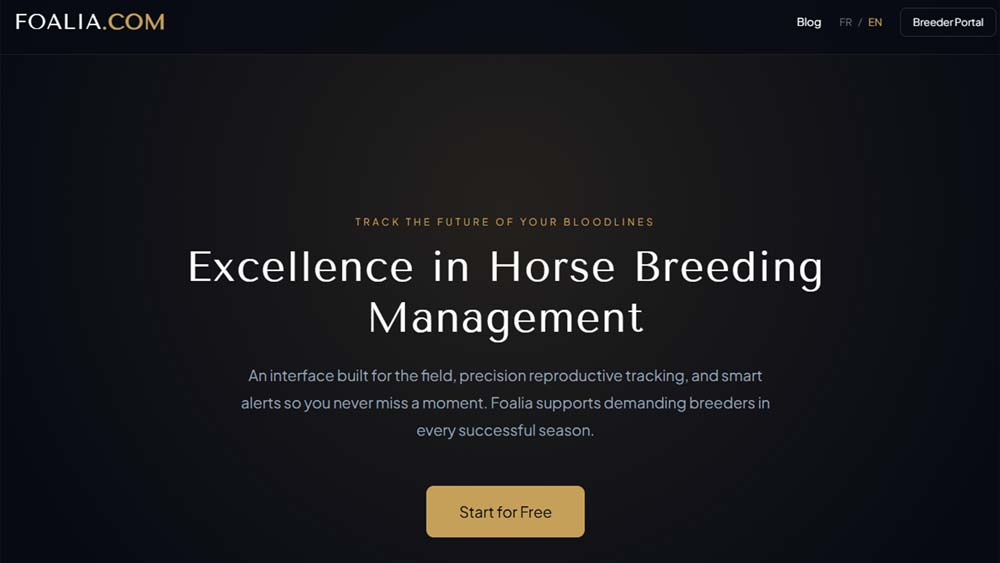
With our equine management platform, you automatically import your horses and gestation histories, track pregnancies with a vigilance index, receive foaling alerts on your smartphone, and maintain compliant records updated in real time. Give your business back what matters most: your connection with your horses.
Frequently Asked Questions
Is a farm record book mandatory for small operations?
Yes. Every equine owner must maintain up-to-date records and track movements regardless of farm size. Even with a single broodmare, these regulations apply.
How can I accurately estimate the foaling date?
Adding eleven months to the breeding date gives a rough estimate because gestation length varies by mare. Relying on each broodmare's actual history significantly refines the forecast. Advanced analytics and vigilance indices integrate this data to alert you at the right moment.
Is a spreadsheet enough to manage a breeding farm?
It works fine at the start, but quickly hits limits. It does not sync with registry databases, generate alerts, or anticipate foalings. As the herd grows, oversights and double entries multiply.
What are the risks of maintaining non-compliant records?
Incomplete or inconsistent records expose you to penalties during inspections and complicate the traceability of your horses. Keeping records in real time rather than scrambling at the last minute is your best protection.
How can I limit health risks during the breeding season?
Set up a complete health log with vaccine reminders and care protocols, and enforce strict biosecurity rules for any incoming horses. Anticipation is always better than managing an outbreak.


