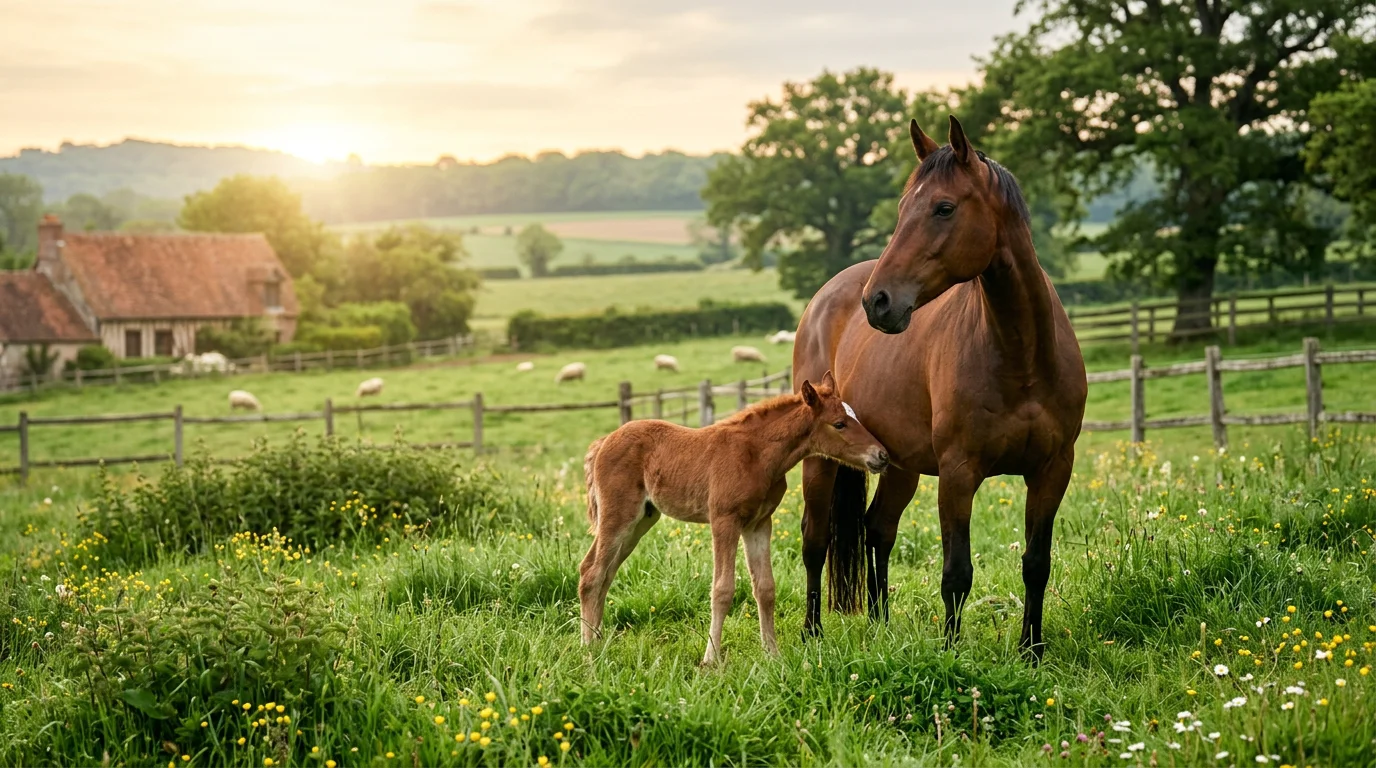
A foal that has a slight cough, is less playful, or takes longer to recover after a gallop in the pasture. Behind these subtle signals, abscesses may already be growing in its lungs. Rhodococcus equi pneumonia advances masked, which is exactly what makes it so formidable in breeding operations. As with other respiratory conditions in young horses, the outcome depends on how quickly you react.
This bacterial disease is not to be taken lightly. It affects seemingly healthy foals in both large breeding farms and small family-run operations. Understanding its mechanics, spotting the first signs, and acting quickly on the environment can radically change the outcome. Here are the concrete benchmarks to protect your youngest stock.
Rhodococcus equi: An Enemy Living in the Soil
Equine rhodococcosis is caused by Rhodococcus equi, a bacterium naturally present in soil and manure. It is soil-borne and ubiquitous: in other words, it lives everywhere in the horse's environment. This infection is a major cause of mortality in foals under six months of age.
The paradox is that adult horses often harbor this bacterium without ever falling ill. Their mature immune systems eliminate it without difficulty. The foal, however, is born with an immature immune system. Around one to three months of age, when maternal colostrum antibodies wane, it becomes the primary target for the germ.
Only certain virulent strains, carrying the vapA gene, actually trigger the disease. These strains survive and multiply inside macrophages—the very cells meant to destroy them—which eventually leads to the formation of lung abscesses.
How Foals Become Infected
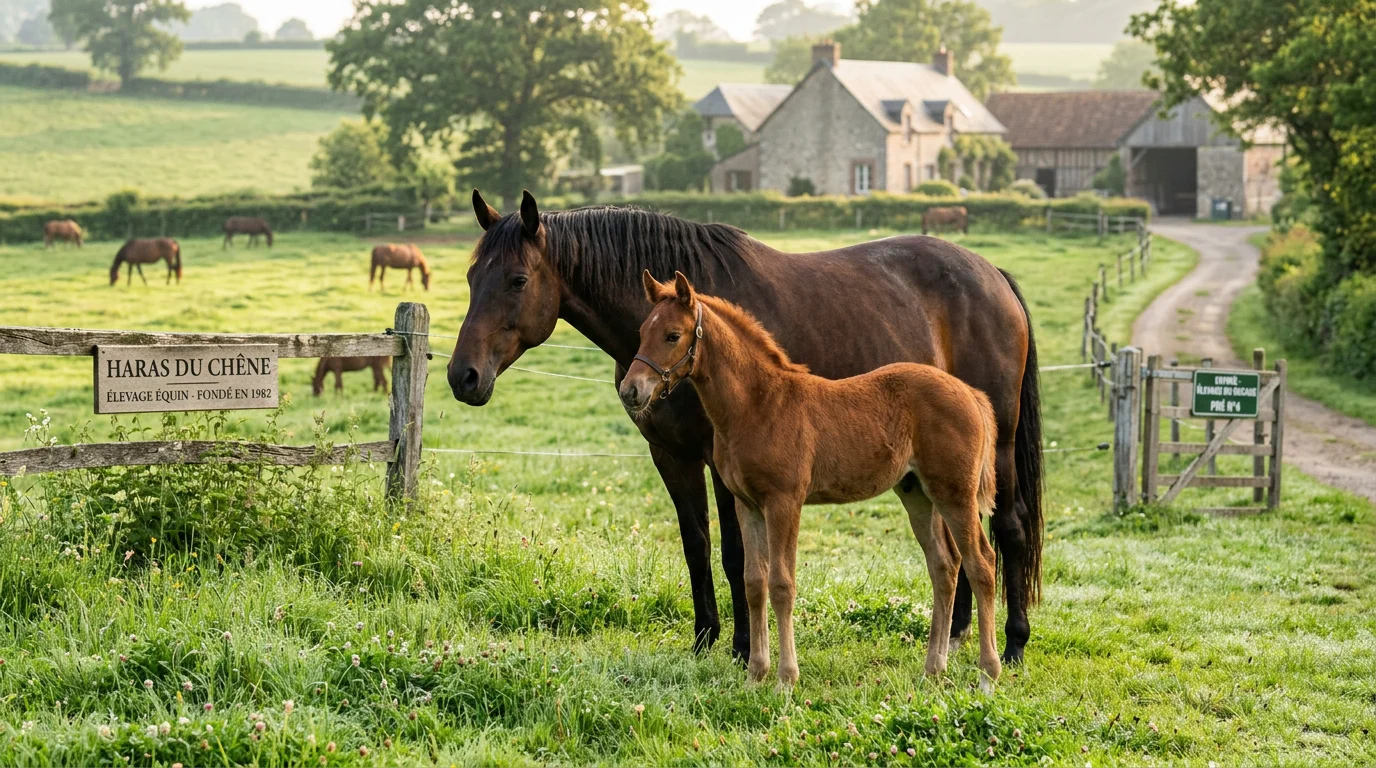
Contamination occurs primarily through the respiratory tract. The foal inhales dust laden with virulent bacteria; the bacteria settle in the lungs, causing inflammation and then abscesses. Direct transmission between foals exists, but it remains secondary to the reservoir provided by the soil.
Certain areas concentrate the risk:
dry, packed, and high-traffic paddocks;
areas around water troughs and hay feeders, which are constantly trampled;
poorly ventilated stalls and dusty bedding;
areas where manure accumulates.
Hot and dry periods are the most critical: the soil dries out, produces more dust, and releases more bacteria into the air. A foal born late in the season reaches its peak sensitivity in mid-summer, when the infectious pressure is at its highest. The management of the broodmare also matters; proper care during gestation helps prepare for foaling in the best sanitary conditions.
Recognizing the Signs Before It Is Too Late
The trap of this foal pneumonia is its insidious onset. While the lesions spread, the foal appears normal. By the time symptoms become visible, the lungs are often already significantly affected.
Respiratory signs to monitor closely:
coughing, initially mild then more pronounced;
fever, sometimes high (above 102.2°F or 39°C);
rapid breathing or visible respiratory effort;
thick or purulent nasal discharge;
lethargy, reduced playfulness, loss of appetite, and stunted growth.
A valuable early indicator: an abnormally slow recovery after exercise in the pasture, with a heart rate that does not return to normal as it should. Extra-pulmonary forms also exist, affecting the digestive system (diarrhea, abdominal abscesses), joints (arthritis), or eyes (uveitis). At the slightest sign of abnormal behavior, do not wait to consult your veterinarian.
Diagnosis and Risk Factors in Breeding
Since symptoms are not specific, they can mimic other bronchopneumonias, particularly those caused by streptococci. Confirmation requires imaging and laboratory testing. Thoracic ultrasound is the gold standard: it reveals abscesses, sometimes before clinical signs appear. Radiographs complete the picture. A respiratory sample, via bronchoalveolar lavage or tracheal wash, followed by culture or PCR, allows for the identification of the bacteria and confirmation that it is a virulent strain.
Regarding epidemiology, risk factors are well-identified: large-scale operations, high horse density, and late births concentrated in hot months. Reducing herd size and increasing acreage per horse remains the first line of structural defense.
Be aware of a common misconception: detecting the bacteria in a foal's manure is not enough to confirm a diagnosis, as many healthy carriers also shed it. Only the combination of imaging and bacterial isolation is definitive.
Treatment: A Supervised Antibiotic Marathon
Management is long and costly. Few antibiotics reach the bacteria, which are protected by their intracellular position and the purulent lesions. The protocol typically relies on a combination of a macrolide and rifampin, two molecules capable of penetrating macrophages. Treatment generally lasts from three to six weeks, with regular imaging check-ups.
It is essential to note that not every foal in a herd should be treated systematically. Some, with few or no symptoms, recover on their own. The preventive use of antibiotics in healthy foals is ineffective and promotes antibiotic resistance. The rule is close monitoring, with daily temperature checks, and targeted treatment only for foals showing fever and clinical signs.
Prevention: Managing the Environment and Monitoring
There is no fully effective vaccine, and hyperimmune plasma only partially strengthens the immunity of at-risk foals. Prevention therefore relies on two concrete pillars: reducing dust exposure and monitoring each foal closely.
water down dry and dusty soil in summer;
regularly move water points and hay feeders to avoid packed areas;
prioritize grassy surfaces over bare paddocks;
properly ventilate stalls and shelters;
frequently remove manure in both pastures and stables;
avoid overcrowding and limit trampling.
This fundamental work also has broader health implications: R. equi is now considered an emerging zoonotic pathogen, primarily in immunocompromised individuals. This is all the more reason to control the environment of breeding farms.
The core of the issue remains daily surveillance. Taking the temperature of every foal, noting the slightest cough, and tracking appetite and recovery after exercise generates a massive amount of information that is difficult to manage on paper. This is where centralized tracking changes the game.
Tracking Criteria | Traditional Paper Tracking | Centralized Tracking with Foalia |
|---|---|---|
Daily temperatures and symptoms | Scattered notebooks, frequent oversights | Connected health record, complete history |
Vaccine reminders and protocols | Manual date calculation | Reminder dates calculated automatically |
Breeding register and traceability | Manual entry and paperwork at night | Automated register |
Health emergency | Scattered phone calls | Geolocated SOS alert to neighboring farms |
To maintain this health tracking without sacrificing your evenings, our automated breeding register centralizes diagnostics, treatments, and reminders.
Key Takeaways for the Field
The fight against Rhodococcus equi in foals is rarely won through treatment and almost always through prevention. A bacterium that lives in the soil, a vulnerable foal aged one to six months, a disease that advances in silence: your best weapon remains daily observation, thermometer in hand, coupled with rigorous management of dust and pasture density. Spot it early, get an ultrasound quickly, treat specifically, and keep a reliable record of every foal. This discipline, more than luck, is what raises healthy young horses.
Take Action with Foalia
Monitoring the temperature of every foal, noting coughs, tracking vaccine reminders, and keeping the register up to date: the mental load of managing a breeding farm is real, especially during the peak foaling season. Nothing replaces your eye, but a tool that centralizes everything saves you precious time and prevents costly oversights.

With the Foalia platform to manage your breeding farm and foaling season, you can maintain a complete veterinary health record with vaccine reminder calculations, automate your breeding register, and trigger a geolocated SOS alert in case of emergency. It is the perfect way to track every foal closely without drowning in paperwork.
Frequently Asked Questions
At what age does Rhodococcus equi affect foals?
It primarily affects foals from one to six months of age, with a peak sensitivity between one and three months. Adult horses often harbor the bacteria without ever developing the disease, thanks to their mature immune systems.
Is Rhodococcus equi contagious between horses?
Direct transmission exists, but it remains secondary. Contamination occurs primarily through the inhalation of dust laden with bacteria present in the soil and manure, particularly during hot and dry periods.
Can antibiotics be given as a preventive measure?
No. The preventive use of antibiotics in healthy foals is ineffective and promotes antibiotic resistance. Monitor the herd closely and treat only those foals showing fever and clinical signs, under veterinary advice.
How can I effectively track the health of my foals?
Daily temperature checks and symptom tracking are essential. A connected health record like Foalia's centralizes history, calculates vaccine reminder dates, and prevents oversights during the busy foaling season.
Is there a vaccine against Rhodococcus equi?
There is no fully effective vaccine to date. Hyperimmune plasma can partially strengthen the immunity of at-risk foals, but prevention relies primarily on environmental management and surveillance.