Show jumping represents a massive share of the equestrian competition activity in the United States, serving as the true backbone of sport horse careers. Behind every successful round stands a fit horse and meticulous preparation, from the breeding pasture to walking the course.
Understanding show jumping means grasping a mechanism that is simple to follow yet demanding to master: the rail stays up or falls, and the clock decides. According to equine industry insights, show jumping is one of the most widespread competitive equestrian practices worldwide. It is time to decode the rules, fences, and levels to progress without unwelcome surprises.
Show Jumping: The Premier Arena Discipline
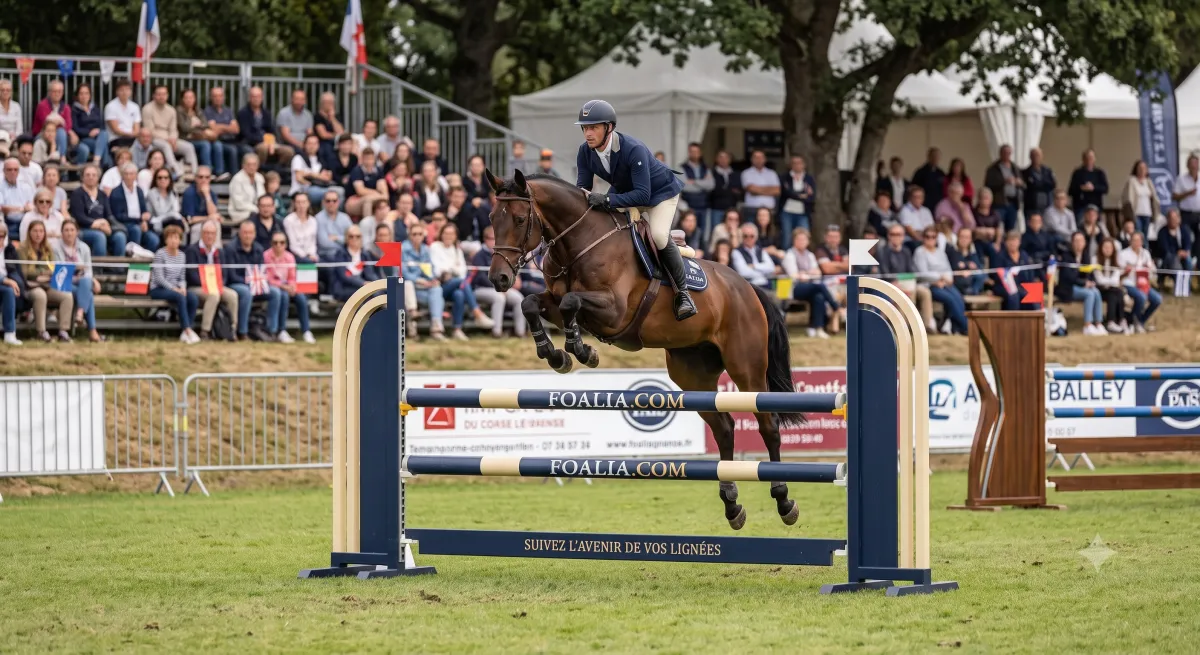
A show jumping competition takes place in a fenced arena where obstacles with movable rails are set up. The horse-and-rider combination must clear these fences in a prescribed order without knocking them down, refusing, or running out, and within the time allowed. The logic is clear: the newcomer watches a rail fall, while the stopwatch separates the competitors.
This straightforward readability explains its success. Yet, the discipline requires fine technique: the rider continuously adjusts the speed, stride length, impulsion, and trajectory of their mount to negotiate every turn and angle. It is an ongoing dialogue between the rider's anticipation and the horse's power, where balance and trust outweigh brute force.
The Rules of the Game: Rails, Refusals, and the Stopwatch
Everything relies on a penalty system. Most classes apply Table A: each fault (knocked rail, refusal, run-out) costs 4 penalties, and the combination with the fewest penalties wins, with the clock breaking ties among clear rounds. Table C, on the other hand, converts every error into seconds added to the course time, prioritizing speed and making the classes highly thrilling.
The penalties escalate. A refusal corresponds to a complete stop in front of the fence, while a run-out is a lateral evasion. Three refusals on the entire course result in elimination, compared to just two in a jump-off. A fall of either the rider or the horse causes immediate elimination. These international rules are regularly reviewed by organizations such as the USEF and the FEI.
Types of Fences and Regulatory Heights
The fence is the key element of the discipline. We distinguish verticals, which test precision; oxers, which demand power and width; water jumps, which require boldness; not to mention combinations (doubles and triples) that require a perfectly regulated canter. At shows, every fence bears a red flag on the right and a white flag on the left, along with a sequence number.
Heights increase with the level. Here are the main benchmarks to navigate US national competitions.
Level | Maximum Fence Height | Target Audience |
Pony Divisions | 1.1 hands to 3.3 feet (1.00 m) | Junior riders, under 18 |
Schooling / Low Children's/Adult | 2.9 feet to 3.9 feet (1.15 m) | Developing riders |
Amateur-Owner / Intermediate | 3.7 feet to 4.7 feet (1.40 m) | Experienced competitors |
Open / Grand Prix | Up to 5.3 feet (1.60 m) | Expert and international riders |
At the highest level, specific puissance classes can reach even greater heights, remaining the exception. Technical difficulty is not limited to height: the track layout, distances between fences, and tight turns make up the true challenge of a course.
Starting a Young Horse Over Fences
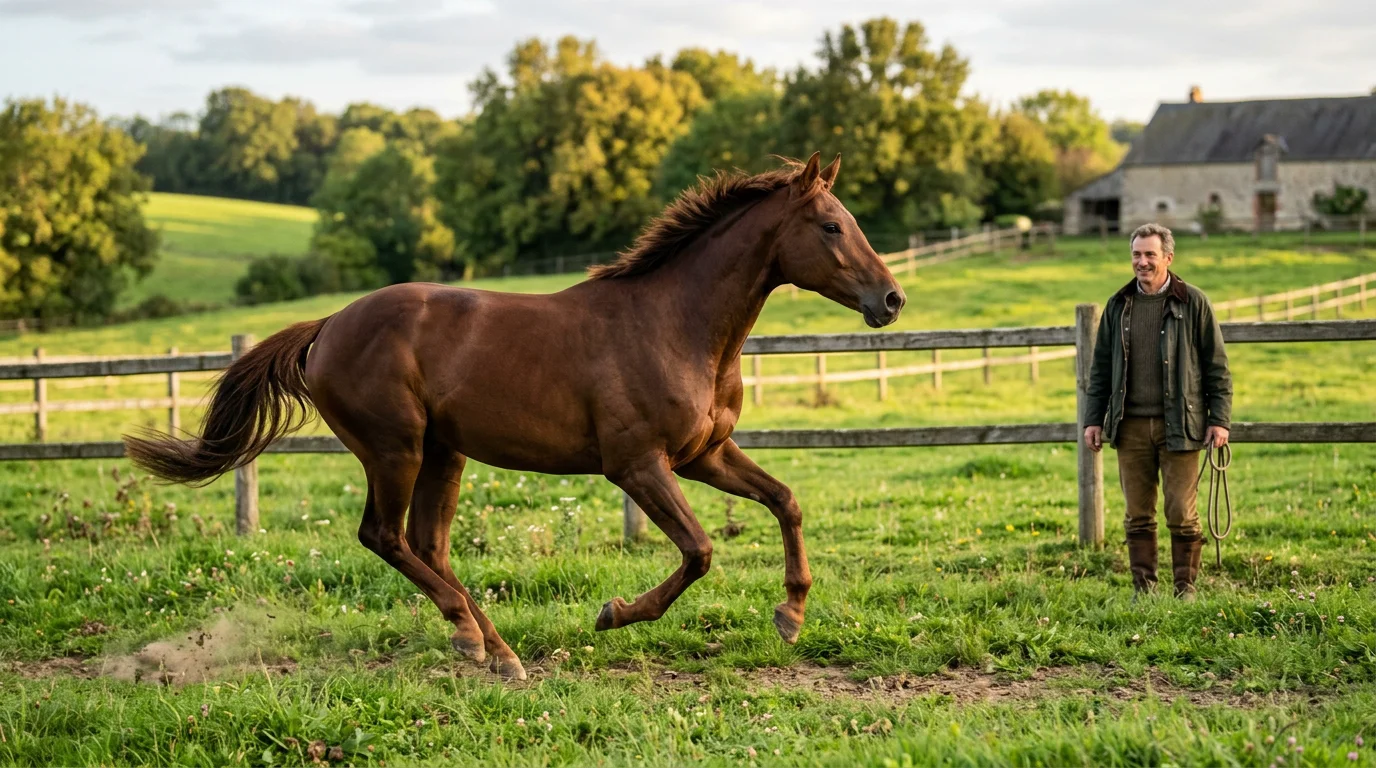
A good show horse is built, not improvised. Up to age six, horses are considered young horses, and their training often continues past age eight. Over-fences education can start as early as age three through free jumping, initially tackling ground poles, then small cross-rails at the trot, before introducing verticals and oxers.
The trot is the ideal starting gait: the youngster always keeps two feet on the ground, making balance easier to manage. Speed is avoided to prevent rush reactions at the last second. For breeders managing multiple young prospects out of their broodmares, keeping track of every pedigree, gestation, and training milestone quickly becomes a headache. Our platform centralizes your herd, automatically tracks previous gestations of your broodmares, and lightens the mental load of management.
From Schooling Shows to Grand Prix: Competition Levels
Progression is clearly structured. Local schooling shows and regional USEF-recognized circuits allow riders to step up technicality gradually: single fences, first combinations, and water obstacles. Next come the Amateur-Owner and Open circuits, all the way up to national Grand Prix events and prestigious US finals.
The economic footprint of the industry is substantial. According to national equestrian statistics, thousands of events take place annually, with show jumping representing a vast majority of entries and active competition horses. Show jumping remains the absolute driver of sport horse activity.
Health and Monitoring: The Foundation of a High-Performing Horse
No clean round happens without a healthy horse. Before shipping to a show, vaccinations must be current: a forgotten booster can result in disqualification and, more importantly, expose the entire barn. Our guide on preventing equine influenza before shows outlines the timelines to respect for a stress-free trip.
Vigilance does not stop at vaccines. A consistent deworming program protects performance and digestive comfort; our equine parasite control protocol establishes the basics of targeted deworming management. Regarding health screenings, our resource on Equine Infectious Anemia (EIA / Coggins test) highlights the sanitary requirements for hauling horses.
This veterinary rigor structures the entire industry. A complete health record with automated reminder tracking helps avoid costly oversights that penalize both competition careers and breeding operations.
What to Remember Before Jumping
Mastering show jumping means combining three pillars: the rules of the game (scoring, refusals, clock), course reading, and flawless physical and sanitary preparation. Riders progress faster when they know the track, respect stride distances, and ride a healthy, well-monitored horse. Start modestly, secure each step, and let confidence build before aiming higher.
Take Action with Foalia
Whether you are campaigning your own homebred horses in the jumper ring or raising future champions, precise tracking of every horse makes all the difference. Between broodmares, gestations, vaccine boosters, and regulatory paperwork, the mental load piles up quickly.

Foalia centralizes your equine herd, tracks your gestations, calculates reminder dates, and streamlines your breeding records, all completely free. Discover our equine breeding management platform and save valuable time both at the barn and in the office.
Frequently Asked Questions
What is show jumping?
Show jumping is an equestrian discipline where the horse-and-rider combination negotiates a course of movable fences in a precise order, without knocking rails down and within the time allowed.
What are the fence heights across levels?
Heights range from 1.1 hands for beginner ponies up to 5.3 feet (1.60 m) in international Grand Prix classes. Schooling levels typically range from 2.9 feet to 3.9 feet, while amateur divisions progress from 3.7 feet to 4.7 feet.
What is the difference between Table A and Table C?
Table A assigns 4 penalty points per fault, and the lowest score wins. Table C converts every error into added seconds on the clock, placing the ultimate emphasis on speed.
At what age should you start training a young horse over fences?
Training can begin as early as age three with free jumping over ground poles and cross-rails. Horses reach peak maturity around age ten, and top competitors often perform successfully well into their teens.
How do you manage the health records of a show horse?
Up-to-date vaccinations, targeted deworming, and regular health screenings like a negative Coggins test are essential to compete and protect your herd. A digital health ledger like Foalia automatically calculates reminder dates to prevent costly oversights.